How to play Spectrum — free online slider guessing game
One slider, two extremes. Read where it lands — closest wins.
- Players
- 1–8 (solo too)
- Length
- ~6 min
- Type
- Dial
- Price
- Free
Spectrum strings a subject between two poles and asks you to place it. Crime to delicacy, useless to essential, tame to terrifying — you drag a needle to where you think it belongs.
The bullseye is hidden and fact-backed, so it isn't a vote about opinions. You're trying to find where the answer actually sits, and scoring is by proximity, so nobody ever scores zero for being roughly right.
Free, no app and no sign-up to join — players hop in with a 4-letter code on their own phone.
How to play Spectrum
The host picks the round count
Eight rounds is the default at about 25 seconds each.
A subject and two poles appear
The scale's ends are labelled and the subject sits somewhere between them.
Drag your needle
Place it wherever you think the truth is. You can adjust until the clock stops.
The bullseye is revealed
The true position drops onto the dial with everyone's needles alongside it.
Score by proximity
The closer you were, the more you banked.
What Spectrum looks like
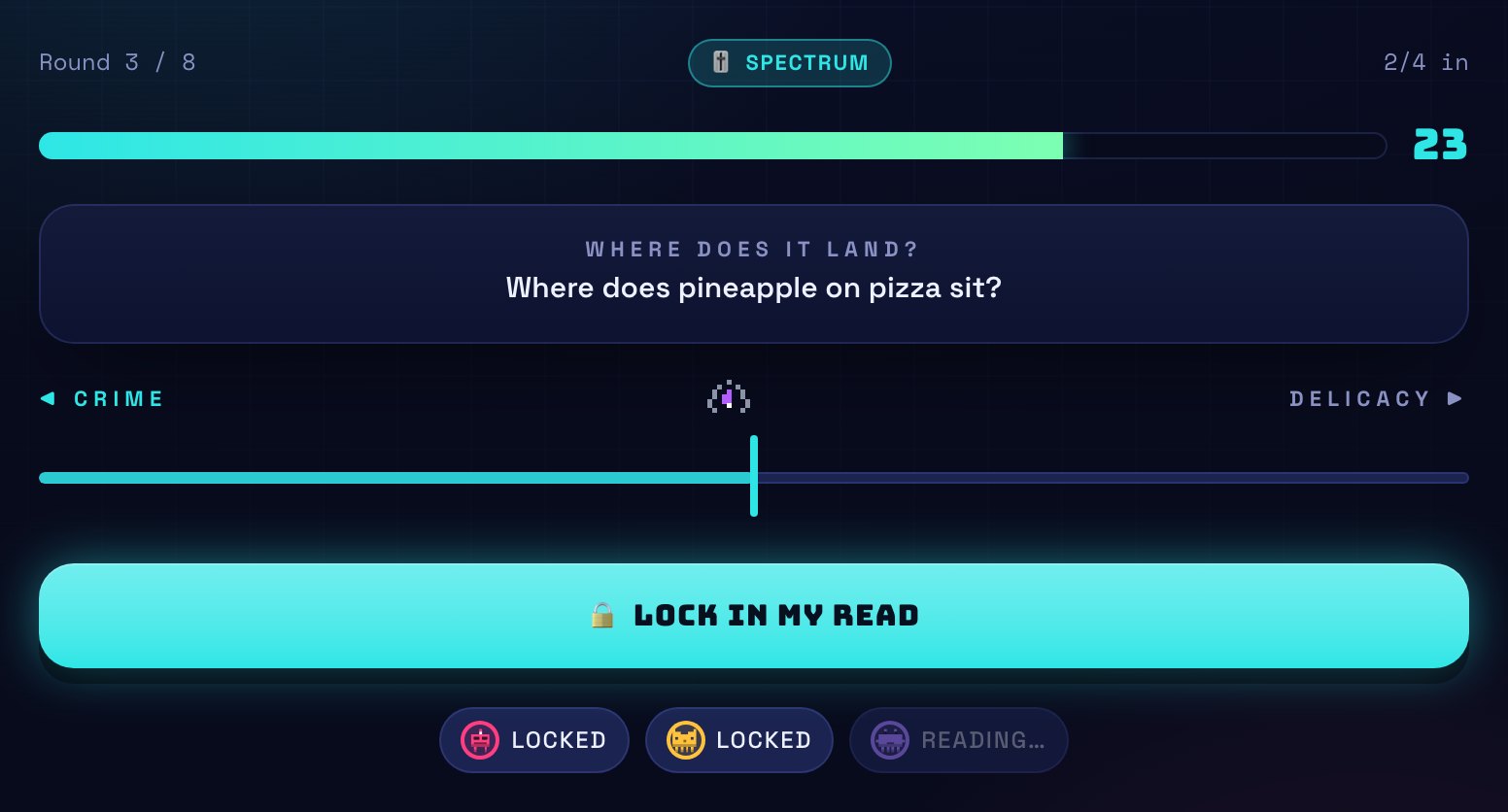
How scoring works
Scoring is by distance from the hidden bullseye, so there's a smooth gradient rather than a right-or-wrong cliff. Being roughly right always pays something.
That means you should always commit to a position — an unmoved needle is the only way to score nothing.
Points accumulate across rounds and the highest total wins.
Tips for winning Spectrum
- Avoid the extremes unless you're certain. The bullseye is rarely at either end, and a needle at 0 or 100 is usually the worst-placed one on the board.
- Think about the scale's labels carefully. 'Useless to essential' means something different from 'rare to common', and misreading the axis is the biggest single error.
- Middle is a safe hedge when you have no idea — it caps your distance from anywhere.
- Move deliberately rather than dithering. Second-guessing usually drags you toward the middle and away from a correct instinct.
Frequently asked questions
How many players do you need for Spectrum?
One to four. It's self-scored so it works solo.
Is it an opinion game?
No — the bullseye is fact-backed and hidden, so you're estimating a real position rather than voting on a preference.
How long is a game?
About 6 minutes at the default eight rounds.
Is it free?
Yes, free to play and free to host, with no account needed to join.
Free, no app and no sign-up to join — players hop in with a 4-letter code on their own phone.