How to play Muse — a free online picture storytelling game like Dixit
One clue, a table of dreamlike cards. Find the storyteller's.




- Players
- 3–8
- Length
- ~12 min
- Type
- Story
- Price
- Free
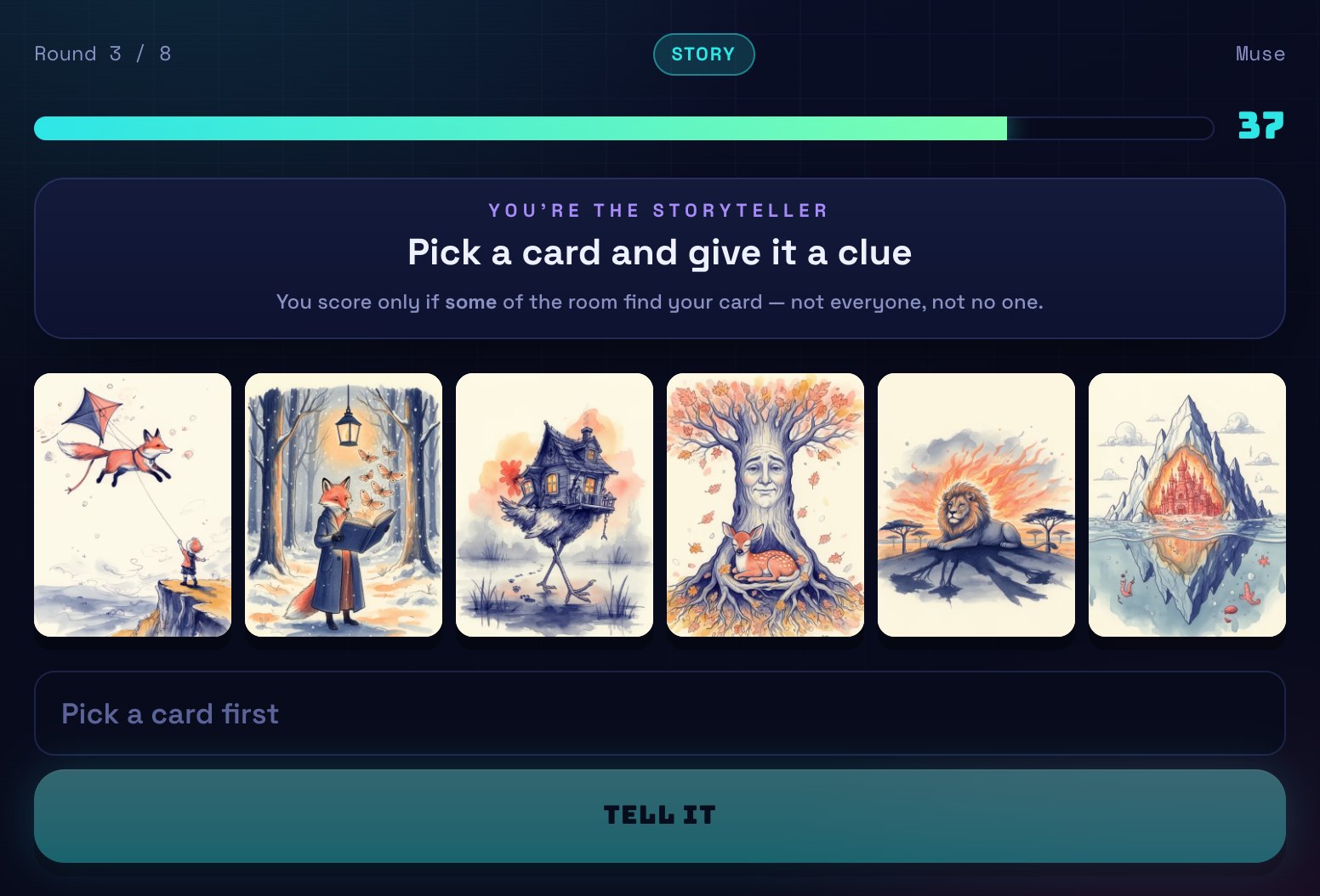
Muse is a storytelling game played with picture cards. Everyone gets a hand of six odd, dreamy illustrations: a lighthouse growing out of a teacup, a staircase climbing into a sleeping whale. Each round one player is the storyteller. They choose a card and say something about it, and that clue can be a single word, a line from a song, or a feeling.
Everyone else then picks the card from their own hand that best fits the clue. The cards are shuffled together and the room votes for the storyteller's one. If you've played Dixit you already know the game. Muse runs in the browser, so nobody needs to install anything or buy a deck.
Your hand of cards is yours alone. Keep it off the shared screen.
Free, no app and no sign-up to join — players hop in with a 4-letter code on their own phone.
How to play Muse
The host picks the number of rounds
Six rounds is the default, and the storyteller role moves round the room each round. With three or four players, eight rounds gives everyone two turns as storyteller.
You get six cards that only you can see
Your hand shows up on your own phone or laptop. After every round you're dealt a new card, so you always have six to choose from.
The storyteller picks a card and gives a clue
They type a clue for one of their cards. It can be short or long, literal or strange. The aim is a clue some people will get, but not everyone.
Everyone else adds a decoy
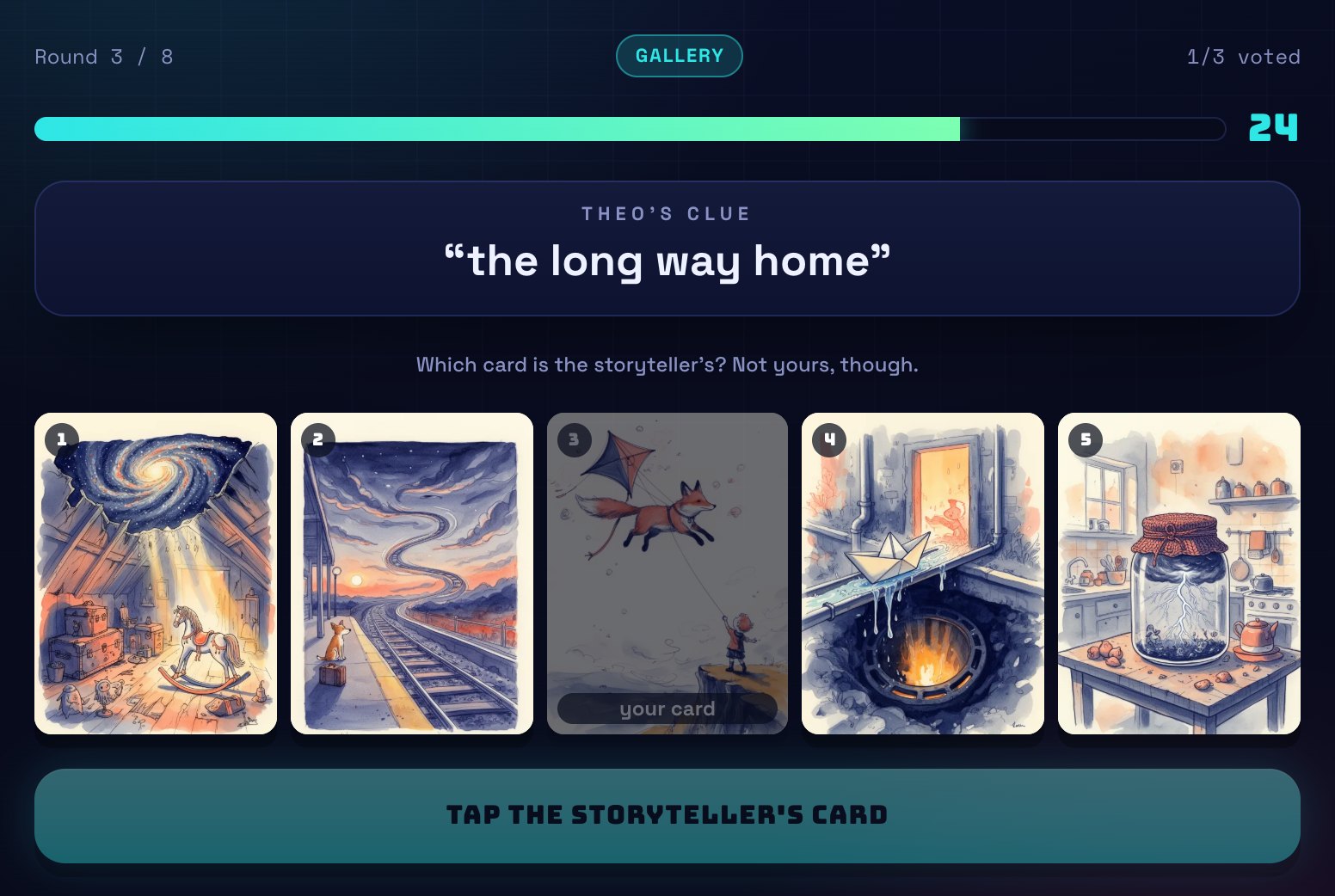
You see the clue and pick the card in your hand that fits it best. You want other players to think your card is the storyteller's.
The room votes
All the cards are shuffled and shown together, sometimes with an extra card from the deck. Everyone except the storyteller votes for the card they think is the real one. You can't vote for your own card.
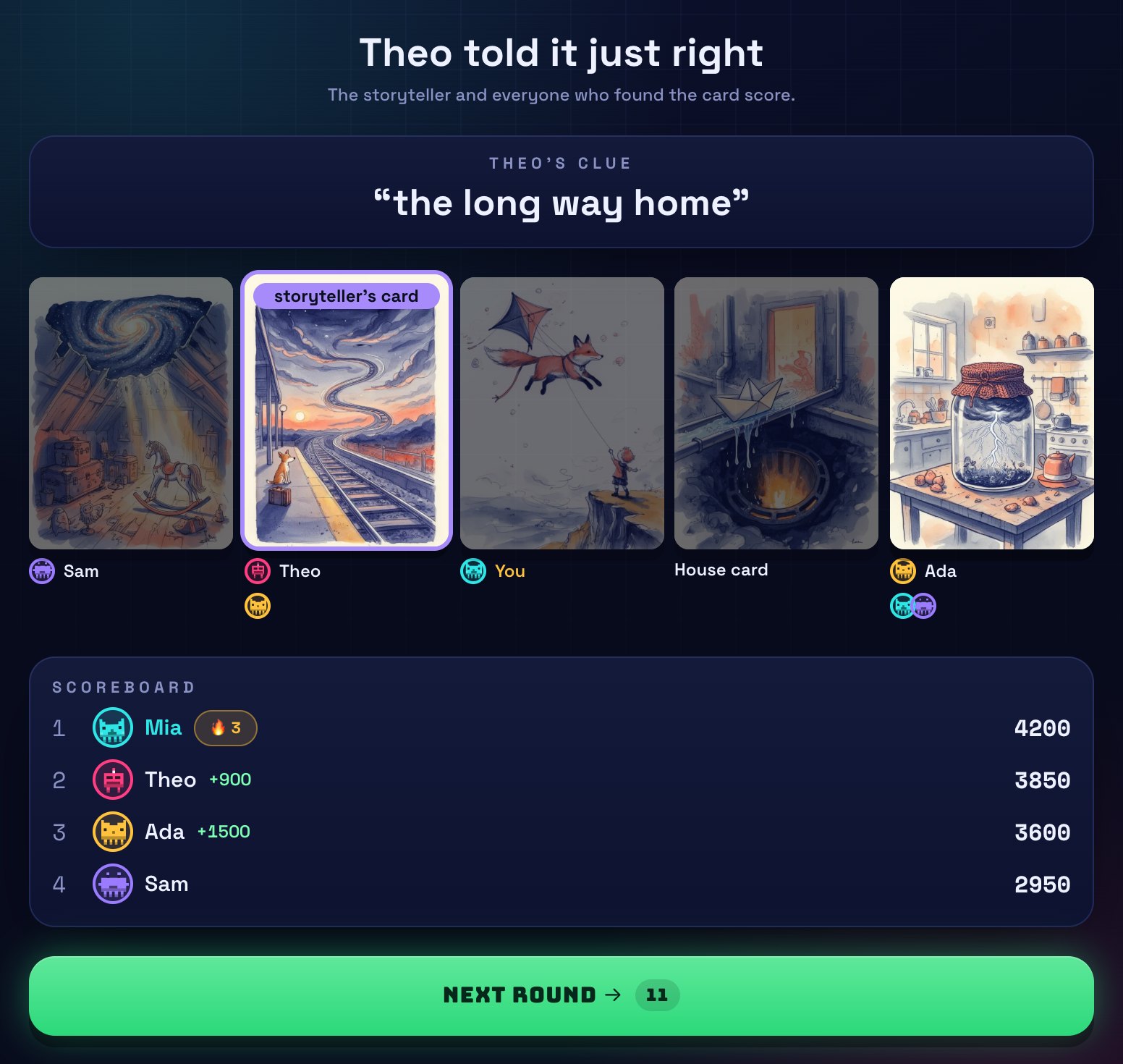
The cards are revealed
The reveal shows which card belonged to whom, who voted for each one, and how well the clue worked.
What Muse looks like
How scoring works
If some players find the storyteller's card but not all of them, the storyteller and everyone who found it score.
If everyone finds it, the clue was too obvious. If nobody does, it was too vague. Either way the storyteller scores nothing and everyone who voted gets points.
Your decoy card earns a bonus for every vote it attracts, up to a limit. So you're scoring even in rounds when you're not the storyteller.
Points add up over the game, and the highest total wins.
Tips for winning Muse
- As storyteller, aim for about half the room. A clue that half your friends get is worth more than one everyone gets.
- Play to the people in the room. A shared joke or a film you all saw makes a good clue: your friends will get it and players who weren't there won't.
- Pick decoys that match how the storyteller thinks. If their clue is about a feeling, a card with the right mood will draw more votes than one with the same objects in it.
- Look at the whole picture, not just the main object. The colours and the mood of a card are often what makes a clue fit.
Frequently asked questions
How many players do you need for Muse?
Three to eight. Three is the minimum. With fewer than five players, extra cards from the deck are added to the vote so there are always enough to guess between.
Is Muse the same as Dixit?
It plays the same way: a storyteller, a clue, decoy cards and a vote. The cards are our own illustrations, and it's played online in a browser instead of with a boxed deck.
What makes a good clue?
One that fits your card but could also fit a few others. A single word, a song lyric, a film quote or a mood all work. What matters is that some players get it and some don't.
Can I play with Blips?
Yes. Blips are the site's bot players, and they can fill seats. They give simple clues and make reasonable guesses. They're there to make up numbers, not to play well.
How long does a game take?
About 12 minutes at the default six rounds.
Is it free?
Yes. It's free to play and free to host, and you don't need an account to join a room.
Free, no app and no sign-up to join — players hop in with a 4-letter code on their own phone.